


FASTlab™ is an advanced automated PET (positron emission tomography) radiochemistry synthesizer developed by GE Healthcare, widely used in medical or research facilities globally. It enables the efficient and consistent production of a wide range of PET tracers and various radio-metal-based tracers. The company approached us with a challenge of creating a system that would support its components testing process with computer vision.
The Background: The Role of Automated Radiochemistry Systems
In modern nuclear medicine, demand for PET imaging is rising rapidly, driven by growing numbers of cancer and Alzheimer’s cases, aging populations, and the push for precision diagnostics and treatment monitoring. One of the biggest challenges is ensuring a steady and reliable supply of PET tracers.
Such radiotracers can be ordered ready-made from the manufacturer, but this creates logistical challenges due to their instability and short shelf life. Alternatively, institutions such as hospitals can produce them in-house using automated cassette- or kit-based systems, like our client’s FASTlab™.
These cassette-based systems increase daily production capacity, minimize human error, and ensure reproducibility – all while complying with strict GMP standards. For patients, that translates into more reliable access to life-changing scans and treatments.
FASTlab™ by GE Healthcare
One of the world’s healthcare giants, GE Healthcare, has a device answering the above challenges. FASTlab™ is an advanced, automated PET radiochemistry synthesizer automating the synthesis of a wide range of PET and radio-metal-based tracers.
It allows tracers to be produced in-house, eliminating the need to order them from a manufacturer located elsewhere in the world just 72 hours or less before they must be administered to a patient.
In the broader industry, it allows PET centers to operate more efficiently, safely, and in compliance with regulatory standards, accelerating both clinical and research applications.
Significance of Cassette-Based Systems
The key feature of FASTlab™ is its cassette-based system. Each pre-loaded, plug-and-play cassette contains reagents and components for tracer synthesis. The only component that must be produced on site is the radioactive isotope, which is generated separately in a cyclotron and then connected to the FASTLab system. This design simplifies setup, reduces contamination risks, and ensures consistent, reproducible results.
The challenge arises when a cassette or its reagent positions are faulty. If assembled incorrectly, the cassette must be discarded entirely – a highly costly outcome. It may also go unnoticed, and if, for example, certain vials are swapped – and the synthesis process will not proceed correctly, potentially putting the patient at risk.
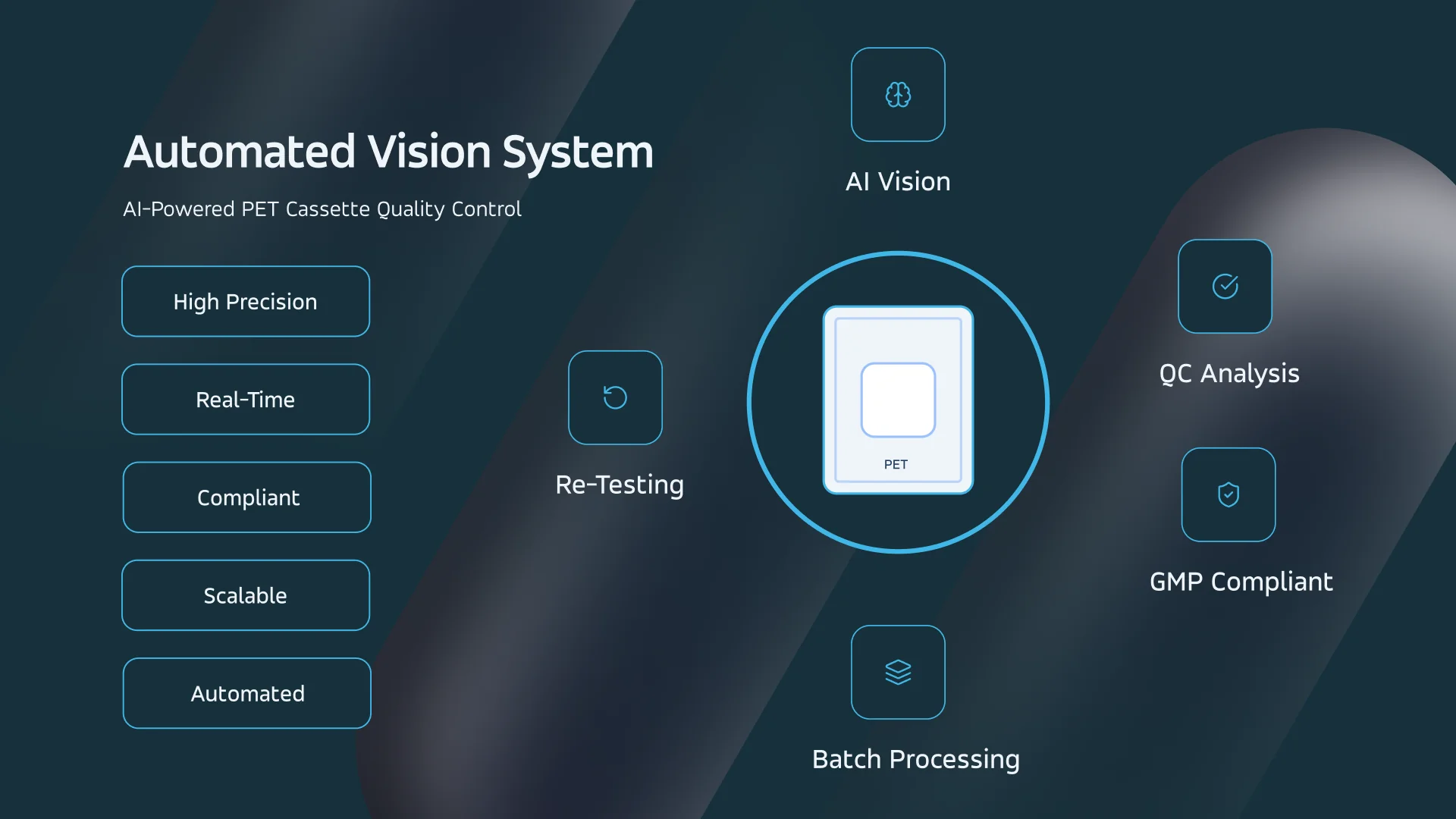
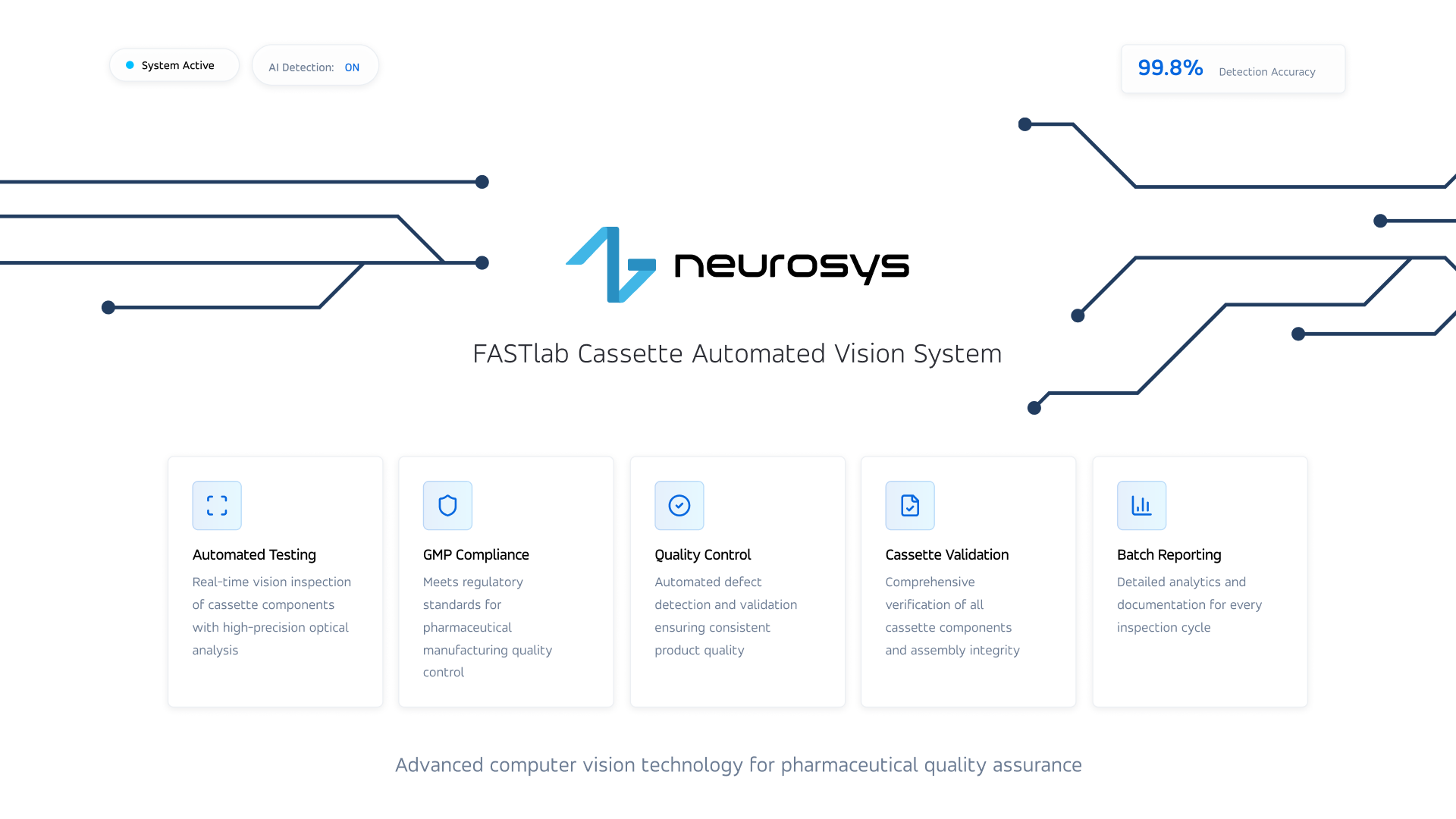
To prevent such threats, we developed the FASTlab Cassette Automated Vision System. It is designed to assist factory workers in inspecting assembled cassettes, ensuring that no incorrect units leave the facility or reach hospitals.
Combining Hardware and Software
The FASTlab Cassette Automated Vision System is a dedicated workstation designed to test the completeness, quality, and correct assembly of FASTlab cassettes. It combines software with hardware – including two cameras, three illuminators, RFID tag reader, touchscreen, and a computing unit.
Using computer vision, the system inspects each cassette by analyzing and comparing images against predefined test specifications for its type.
Beyond cassette testing, the system also offers a full suite of administrative features, including user management, storage of inspection histories and production batches, batch reporting, creation and modification of inspection profiles, audit trails, and secure data archiving and backup. It is compliant with GMP and 21 CFR Part 11 regulations.